

What You Will Need
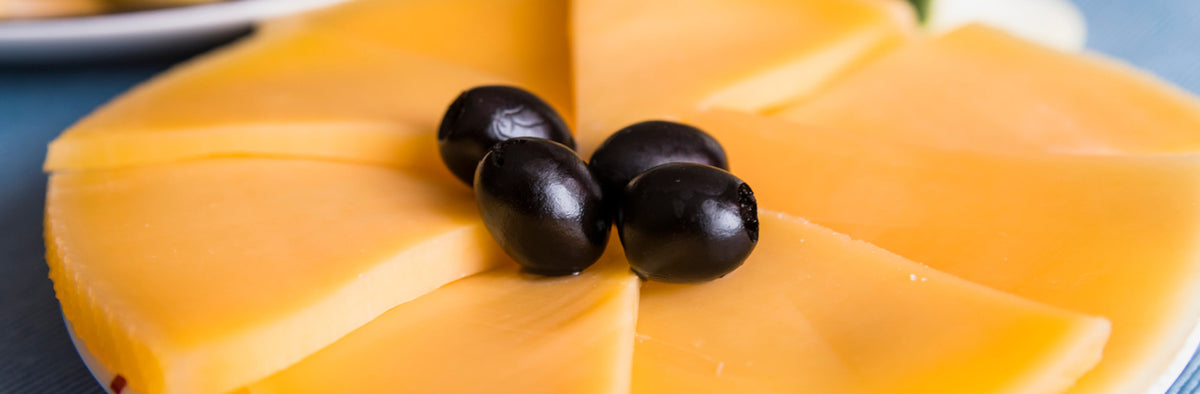
This recipe makes one Colby cheese weighing approximately 900 g.
Most of the components are supplied as part of the Epicurean Premium Cheese Kit.
- 7.5 litres of full-cream milk
- 2 ml calcium chloride dissolved in ¼ cup of cool water
- ½ teaspoon MA11 Mesophilic Culture
- 2 ml rennet dissolved in ¼ cup of cooled, boiled water
- 2 tablespoons cheese salt
- 4–6 drops annatto; optional, for a deeper yellow cheese colour
- Cheesecloth or butter muslin
- 800 g–1 kg hard cheese basket
- Cheese press
- Cheese wax
- Waxing brush
Method
Clean and Sterilise
Thoroughly clean and sterilise everything that will be used during the cheese-making process.
Prepare the Starter
The day before making the cheese, prepare an MA11 Mesophilic Culture starter using the method described in the Cheese-Making Basics guide.
Prepare the Milk
Heat the milk to 30°C.
Add the calcium chloride solution, followed by the prepared starter.
Cover and allow the milk to ripen for 60 minutes.
Add the Annatto
Dilute the annatto in 20 ml of cooled, boiled water.
Add it to the ripened milk and gently stir until the colour is evenly distributed.
Annatto is optional and is used to produce a deeper yellow cheese colour.
Add the Rennet
Gently stir the diluted rennet into the milk using an up-and-down motion for at least one minute.
Cover and allow the milk to set for approximately 30 minutes, or until a clean break is achieved.
Test for a Clean Break
Slide a knife into the curd at an angle and lift a small amount on the side of the blade.
If the curd breaks cleanly around the knife and whey flows into the crack, you have achieved a clean break.
Cut the Curd
Cut the curds into approximately 10 mm cubes using the method described in the Cheese-Making Basics guide.
Allow the curds to stand undisturbed for 10 minutes.
Cook the Curds
Gradually heat the curds by approximately 1°C every five minutes until they reach 39°C.
Maintain this temperature for 30 minutes, stirring regularly to prevent the curds from matting together.
Wash the Curds
Drain the whey until it is level with the curds.
While stirring continuously, slowly add enough water at 15°C to reduce the temperature of the curds to 27°C.
Maintain this temperature for 15 minutes, stirring regularly.
The temperature of the added water will affect the moisture content of the finished cheese.
For a drier cheese, keep the curds a few degrees above 27°C. For a moister cheese, keep them a few degrees below 27°C.
Drain the Curds
Pour the curds into a colander and allow them to drain for 20 minutes.
Salt the Curds
Break the curds into pieces approximately the size of a thumbnail.
Add the cheese salt and mix thoroughly until it is evenly distributed.
Fill the Cheese Basket
Line the cheese basket with cheesecloth or butter muslin.
Transfer the curds into the lined basket and press lightly with 8 kg of weight for 20 minutes.
Redress the Cheese
Remove the cheese from the basket and carefully peel away the cheesecloth.
Turn the cheese over, rewrap it in the cheesecloth and return it to the basket.
Press with 14 kg of weight for 20 minutes.
Continue Pressing
Remove, turn and redress the cheese again.
Press with 18 kg of weight for one hour.
Repeat the process once more, then press with 22 kg of weight for 12 hours.
Air-Dry the Cheese
Remove the cheese from the basket and carefully peel away the cheesecloth.
Air-dry the cheese at room temperature for two to five days, or until the surface is completely dry to the touch.
Turn the cheese regularly to encourage even drying.
Wax the Cheese
Melt the cheese wax and use the waxing brush to thoroughly coat the entire surface of the cheese.
Ensure there are no exposed areas or gaps in the wax coating.
Age the Cheese
Age the waxed cheese at 10–12°C for three to 12 months.
The Colby will develop a stronger and sharper flavour as it ages.